Choosing a new filling machine is confusing. The wrong one can lead to high rejection rates and production headaches. It's a costly mistake you want to avoid.
The best eye drop filling machine depends on your specific needs. You must match the automation level, system design, pump technology, and machine footprint to your production scale, bottle type, liquid properties, and cleanroom layout to ensure a successful investment.
I remember a long-time client visiting me many years ago. He was expanding his factory and got straight to the point: "Mike, all the machines look the same, but the prices are so different. How do I choose?" This is a great question. A filling line isn't just a pile of stainless steel. For tiny 5ml or 10ml bottles, even a small vibration can cause huge problems. Choosing a machine is like choosing a new heart for your production line for the next five years. To help you, I've put together this guide based on my experience. I hope it helps you make the right choice.
Manual, Semi-Auto, or Fully Automatic: Which Level of Automation Suits Your Production[^1] Scale?
Feeling stuck between different automation levels? You worry about overspending on features you don't need or buying a machine that you will outgrow too quickly.
For R&D or small startup batches, manual or semi-automatic machines work well. But if your daily production is over 10,000 bottles, you need a fully automatic line for consistency and GMP compliance.I suggest a modular design you can upgrade later.
When I advise clients, I always tell them to think about where their business will be in five years, not just today. A machine is a long-term investment. Choosing the right level of automation is critical to support your growth without becoming a bottleneck. For example, a fully automatic line not only reduces labor costs but also guarantees high consistency through its PLC programming. This is something auditors look for during GMP inspections. It ensures every bottle is filled and sealed the exact same way, every time.
Matching Automation to Your Business Stage
Here is a simple breakdown to help you match the machine type to your production needs.
| Automation Level | Best For | Pros | Cons |
|---|---|---|---|
| Manual | R&D, Lab Testing | Low initial cost, easy to use | Low efficiency, labor-intensive |
| Semi-Automatic | Small to Medium Scale | Better efficiency than manual | Still requires some manual labor |
| Fully Automatic | Large-Scale Production | High speed, minimal labor, high consistency | High initial investment, complex setup |
My advice for a growing business is to invest in a "modular" fully automatic line. This means you can start with a core filling and capping machine and easily add other equipment, like a labeling or packaging machine, as your production demands increase. This approach protects your initial investment and allows your production line to grow with you.
Rotary or Linear Filling System: Which Design Offers Better Accuracy for Small Bottles?
Are your small bottles tipping over on the line? This instability causes spills, inaccurate fills, and high rejection rates, which directly hurts your profits and efficiency.
For small and lightweight eye drop bottles (usually 5ml to 30ml), a rotary filling system offers much better accuracy. It uses a star wheel to securely lock each bottle in place, which stops vibration and ensures the filling needle is perfectly aligned.
When you are filling tiny, light bottles, stability is everything. Linear systems typically move bottles on a straight conveyor belt. During the start-and-stop motion, these little bottles can easily vibrate, shift, or even tip over. This causes the filling nozzle to miss the bottle opening, leading to product loss and a messy production line. A rotary system solves this problem with a much smarter design. It uses a star wheel, which is a round plate with custom-sized pockets for your bottles. This design provides "forced positioning," meaning each bottle is securely held in its pocket as the wheel turns.
The Physics of Stability: Rotary vs. Linear
Think of it this way: a linear system is like trying to fill tiny cups on a tray that someone is shaking. A rotary system is like having a tray with perfect cup holders that prevent any movement. This stability is especially important at high speeds, like 60-100 bottles per minute.
| Feature | Rotary System | Linear System |
|---|---|---|
| Stability | Excellent; bottles locked in a star wheel | Fair; bottles can vibrate and shift |
| Small Bottles | Ideal; forced positioning prevents tipping | Risky; prone to instability and falls |
| Speed | Maintains high accuracy at high speeds | Accuracy can decrease as speed increases |
| Alignment | Precise alignment of bottle and nozzle | Alignment can be inconsistent |
This is why, for the past 20 years, my company has almost always recommended rotary systems to clients who need high-efficiency, high-accuracy production for their small bottle products. The reliability is simply unmatched.
Peristaltic Pump or Piston Pump: Which Filling Technology is Best for Your Liquid?
Are you worried about cross-contamination between product batches? Complicated cleaning procedures can waste hours of production time, and you can never be 100% sure the product is pure.
For sensitive or high-value eye drops, a precision peristaltic pump is the best choice. Its "non-contact" design means the liquid only touches a sterile, disposable tube, completely removing the risk of cross-contamination and making batch changes much faster.
The choice of pump really comes down to the value of your liquid and your regulatory needs. Piston pumps are known for their high accuracy and durability, but they require deep cleaning between batches because the liquid directly touches the pump's internal parts.In the eye drop industry, I almost always recommend a peristaltic pump instead. Its biggest advantage is that the filling process is "non-contact." The liquid flows through a flexible tube that is squeezed by rollers on the pump head. The liquid never touches the pump itself. This design is brilliant for a few reasons.
Purity and Efficiency: The Pump's Role
First, it eliminates the risk of cross-contamination between different products. Second, when you need to switch to a new batch, you don't need a long Clean-in-Place (CIP) process. You simply throw away the old tube and install a new, sterile one in a matter of minutes. This can save you hours of downtime.
| Feature | Peristaltic Pump | Piston Pump |
|---|---|---|
| Contamination Risk | Extremely Low (non-contact) | Moderate (direct contact) |
| Cleaning/Changeover | Very Fast (replace tube) | Slow (full CIP/SIP required) |
| Best Use Case | Sterile, high-value liquids, biologics | General liquids, viscous products |
| Maintenance | Simple; replace tubing | More complex; seals and parts |
For expensive and easily contaminated products like biological preparations or advanced eye drops, choosing a peristaltic pump is not just a technical decision. It is a choice to guarantee the safety and purity of your medicine.
How Much Space Do You Need? Optimizing Your Cleanroom Layout for a Filling Line?
Is your cleanroom space limited and expensive? A poorly planned machine layout can create bottlenecks, reduce your team's efficiency, and make simple maintenance a huge challenge.
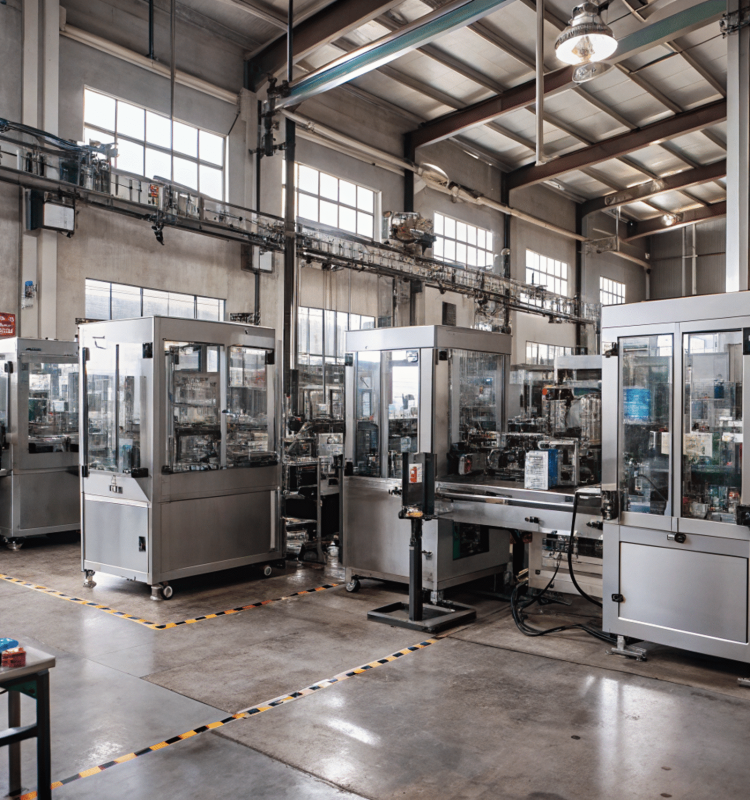
You can optimize your layout with a compact, integrated machine design. Look for U-shaped or single-sided layouts that combine filling, capping, and sealing on one frame. This reduces the machine's footprint and saves valuable cleanroom space and operational costs.
Every square meter of a pharmaceutical cleanroom represents a significant cost, both in construction and ongoing maintenance. So, the goal is always to maximize efficiency in the smallest possible footprint. The key to layout optimization is a "compact design" and "smooth operation." In the designs my team has worked on, we often use U-shaped or single-sided layouts. These designs integrate multiple steps like filling, stoppering, and capping into a single main machine frame. This dramatically reduces the total floor space the equipment needs.
Smart Layouts for Efficient Production
But a compact machine is only half the solution. You also have to think about how people and materials will move around it. You must leave enough space for maintenance access so technicians can service the machine easily. You also need clear paths for bringing empty bottles in and taking finished products out. This prevents a "traffic jam" where people and materials get in each other's way.
Here are the key points to consider for your layout:
- Footprint: Choose an integrated machine to save space.
- Material Flow: Design clear, separate paths for raw materials and finished goods.
- Personnel Flow: Ensure there is enough room for operators and maintenance staff to work safely.
- Future Expansion: Leave space for adding new modules, like a labeler or cartoner, later on.
As a partner to my clients, we often perform 3D modeling simulations using their actual floor plans. This helps everyone visualize the final layout and ensure the line not only fits but also allows employees to work efficiently and ergonomically.
Conclusion
Choosing the right machine involves matching automation, system design, pump technology, and layout to your goals. A customized solution is the best way to maximize your return on investment.
[^1]:Learn more eyedrops filling machines.