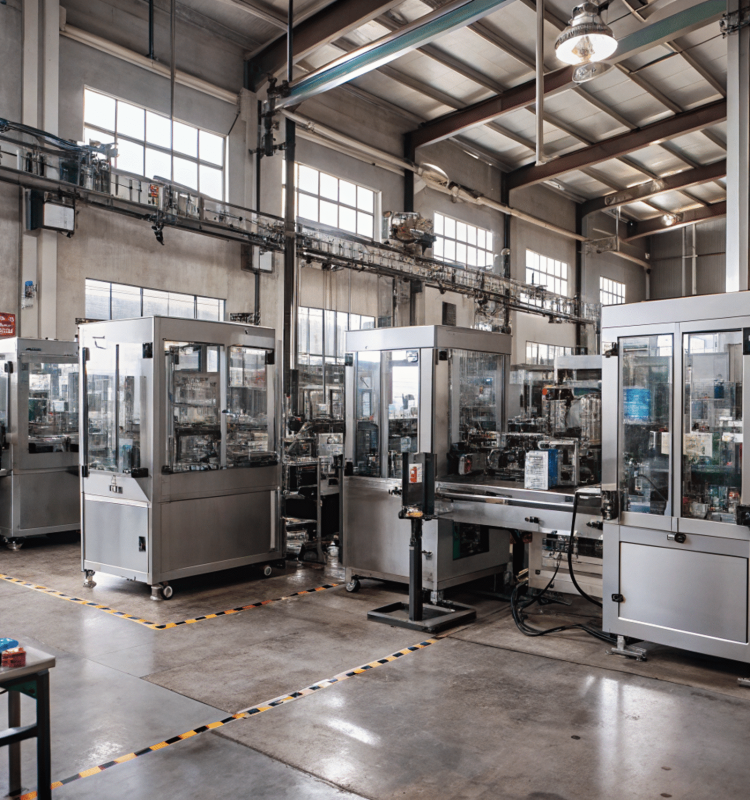
Are you chasing machine speed but still facing production bottlenecks? True efficiency isn’t about how fast one machine runs, but how well the entire line works together.
The key to maximum Overall Equipment Effectiveness (OEE) is integrating your filling, capping, and labeling processes. This creates a stable, accurate, and seamless production line that eliminates bottlenecks, reduces risk, and delivers true value beyond just the speed of individual machines.
I once worked with a startup company that learned this lesson the hard way. Their filling machine was incredibly fast, but the long conveyor connecting it to the capper was a disaster zone. Bottles would constantly get backed up, bump into each other, and even tip over.
Then, at the manual labeling station, they struggled with misaligned labels and unreadable batch numbers, causing a lot of rework. This experience showed me that focusing only on the speed of one part of the line is a mistake. True automation is like a well-trained team where every player—filling, capping, and labeling—works in perfect sync. This is the only way to get the highest efficiency and lowest risk.
How Does Monoblock Design Improve Overall Equipment Effectiveness (OEE) in Reagent Production Lines?
Struggling with a production floor full of disconnected machines? These long conveyor lines create bottlenecks and frequent stops, killing your overall efficiency.
A Monoblock design integrates core functions like filling, capping, and labeling onto a single, compact base. It uses one control system to synchronize everything, shortening transport paths and cutting down on failure points. This unified approach directly boosts your OEE.
Dive Deeper: From Disconnected to Integrated
In a traditional production line, you have separate machines for each step. A filler here, a capper over there, and a labeler at the end, all linked by long conveyors. While it seems logical, this setup is a major source of inefficiency. A single tipped bottle can halt the entire downstream process, creating a traffic jam that kills your OEE. It also takes up a huge amount of valuable cleanroom space.
The Monoblock design changes this completely. It brings all the key processes into one unified system. Think of it as moving from a group of individual players to a single, coordinated team. All actions are controlled by one central PLC, ensuring every step happens in perfect harmony. This dramatically reduces the distance bottles travel, which means fewer chances for them to tip over, collide, or get contaminated. The result is a more stable and reliable line with far less downtime.
| Feature | Traditional Line | Monoblock Design |
|---|---|---|
| Footprint | Large, spread out | Compact, space-saving |
| Control System | Multiple, unsynchronized | Single, unified PLC |
| Bottle Transfer | Long, high-risk conveyors | Short, synchronized star wheel |
| Downtime Risk | High, frequent bottlenecks | Low, reduced failure points |
| Changeover | Slow and complex | Fast and streamlined |
By moving to a Monoblock system, you not only increase your throughput but also ensure the safety and sterility of your products, which is critical when dealing with expensive diagnostic reagents.
Can an Integrated Capping System Handle Screw Caps, Snap Caps, and Stopper Plugging with Minimal Changeover Time?
Your product line uses various container seals, right? Switching between screw caps, snap caps, and stoppers can cause long, costly downtime, hurting your production schedule.
Yes, an integrated system with a modular design can handle this. Quick-change capping heads and a unified servo control system allow you to switch between cap types in as little as 15 minutes. Just swap the module and load a pre-set program.
Dive Deeper: Flexibility Through Modular Design
The challenge with diagnostic reagents is their diversity. One day you're running vials that need a precise screw cap, and the next you have tubes that require a snap-on cap or a rubber stopper. In a traditional setup, changing from one to another could take hours, involving complex mechanical adjustments.
A modern, integrated capping system solves this problem with two key innovations: modularity and servo control. The capping heads themselves are designed as quick-change modules. This means an operator can physically swap a screw capping head for a stopper-placing head without needing a toolbox, often in just 15 to 30 minutes.
The second part is the digital control. All modules are driven by a single servo system. Instead of making manual adjustments for torque or pressure, the operator simply selects the pre-programmed recipe for the new cap type on the PLC touchscreen. This instantly sets the correct parameters, like capping torque for a screw cap or the exact pressure for a snap cap.
| Sealing Type | Key Challenge | Integrated System Solution |
|---|---|---|
| Screw Caps | Consistent torque | Servo-controlled torque head |
| Snap Caps | Correct placement & pressure | Quick-change press-on head |
| Stopper Plugs | Gentle and precise insertion | Pick-and-place vacuum gripper |
This combination of physical modularity and digital programming gives you the power to switch between sealing types smoothly and reliably, minimizing downtime and maximizing the flexibility of your production line.
Beyond QC: What Role Do Vision Inspection Systems Play in Eliminating Errors in Filling[^1], Capping, and Labeling Stages?
Relying on random quality checks at the end of the line? This old method only finds problems after they've already happened, leading to expensive rework and scrap.
Modern vision inspection systems act as digital guardians, providing 100% online inspection. They use cameras to proactively check everything in real-time—from fill levels to label alignment—and instantly reject any errors, preventing defects from ever reaching the end of your line.
Dive Deeper: From Passive Detection to Proactive Prevention
Traditional Quality Control (QC) is a passive process. You pull a few samples off the line and inspect them. If you find a problem, a whole batch might be compromised. This is risky and inefficient. Vision inspection systems flip this model on its head by moving from detection to prevention.
By integrating high-speed industrial cameras and smart algorithms at critical points, you get a set of "eyes" that never blink. These systems perform a 100% inspection on every single product that passes through.After filling, a camera verifies the liquid level is perfect. After capping, it confirms the cap is on straight and sealed correctly. After labeling, it checks that the label is perfectly aligned and that the batch code is clear and readable.
If a vision system spots even a tiny deviation, it does two things instantly. First, it triggers a rejection mechanism to remove the faulty product from the line. Second, it can send a feedback signal to the upstream machine's control system. For example, if it detects a slightly low fill level, it can tell the filler to make a micro-adjustment. This intelligent feedback loop ensures the process self-corrects, moving you toward zero-defect production.
| Inspection Point | What It Checks | Action on Error |
|---|---|---|
| Filling Station | Liquid fill volume | Reject & signal filler to adjust |
| Capping Station | Cap presence, alignment, seal | Reject & flag capper for review |
| Labeling Station | Label position, skew, code clarity | Reject & alert for label roll issue |
This elevates your quality assurance from a guessing game to a precise science, ensuring every single diagnostic kit you ship meets the highest standards.
Conclusion
True efficiency comes from smart integration, not just speed. A unified system with a Monoblock design, flexible capping, and proactive vision inspection will deliver the stability and quality you need.
[^1]:Discover more reagent filling machines.