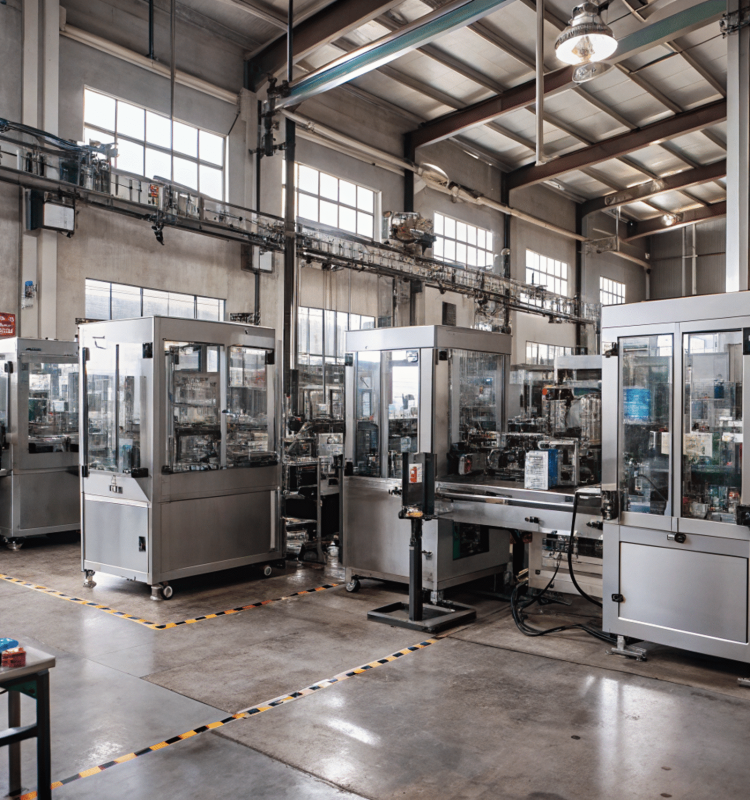
Filling thick creams quickly is a huge challenge. This often slows down production and creates costly product waste. But the right engineering approach can solve both problems at once.
To manage high viscosity and throughput, you need a system approach. This means using low-shear pumps, integrating the line with PLCs, using precise servo-driven fillers, and designing equipment for quick cleaning. This combination ensures a smooth, fast, and efficient process for thick skincare creams.
I remember a few years ago, a beauty brand approached us. They had a hit anti-aging cream that was very thick and rich. Demand was huge, but their old production line couldn't keep up. When they tried to speed things up, the cream would pulsate and get air bubbles. The filling amounts were all over the place. This experience taught me that "high viscosity" and "high throughput" don't have to be enemies. The key is smart engineering. Let's break down how we achieve this.
How Can Viscous Cream[^1] Products Be Transferred Efficiently Without Damage or Pulsation?
Moving thick creams often damages their texture or causes pulsation. This leads to inconsistent filling and poor product quality. A proper pump and pipeline design is the simple solution.
The key is choosing the right sanitary pump, like a screw or rotor pump, for a gentle, low-shear flow. You also need to optimize the pipeline with large diameters and smooth connections. If using a piston pump, a pulsation dampener is essential to ensure a stable, continuous flow.
When you're dealing with high-viscosity creams, the transfer process is critical. You can't just push them through any pipe. You need to avoid high shear forces, which can break down the cream's structure, and pulsation, which ruins filling accuracy.
Choosing the Right Pump and Pipeline
The heart of the transfer system is the pump. We almost always recommend progressive cavity (screw) pumps or rotary lobe pumps. They move the product gently and continuously, which is perfect for sensitive and thick materials. This avoids the pulsing you get with other pump types. At the same time, the pipeline itself must be designed correctly. This means using pipes with a sufficient diameter, ensuring all connections are smooth, and keeping bends and valves to a minimum. Every sharp turn or restriction adds pressure and can cause problems. If a piston pump is unavoidable, installing a pulsation dampener is a must. It absorbs pressure spikes and smooths out the flow.
| Feature | Importance for Viscous Creams |
|---|---|
| Pump Type | Screw or lobe pumps provide low-shear, non-pulsating flow. |
| Pipeline Diameter | A larger diameter reduces back pressure and stress on the product. |
| Smooth Connections | Prevents dead spots and turbulence, ensuring a smooth flow. |
| Minimal Bends | Reduces friction and potential for product damage. |
What Are the Essential Integration Points for a Seamless High-Speed Cream Production Line?
Your production line has many machines. If they don't talk to each other, you get constant bottlenecks and shutdowns. Proper integration is the only way to create a truly seamless line.
The core of a seamless line is synchronization. You need conveyor buffers to manage temporary stops and high-speed PLCs with sensors for precise "handshake" communication between machines. A central HMI control panel simplifies speed adjustments and diagnostics for the entire line.
A high-speed line is more than just a collection of fast machines. It's a single, coordinated system. If one part stops, the whole line can go down. That's why integration is so important. The goal is to make all the machines—from the bottle unscrambler to the labeler—work together as one.
The Digital Backbone of Your Line
First, you need dynamic buffer zones. These can be small turntables or accumulator conveyors placed between machines. If the capper has a brief jam, the buffer allows the filler to keep running for a short time, preventing a full stop. Second, you need smart communication.
We use PLCs (Programmable Logic Controllers) and sensors to create a digital "handshake." For example, a sensor tells the filler that a bottle is perfectly in place, so it can start filling. Once done, it sends a signal to the capper that a bottle is on its way. Finally, everything should be managed from one place. A central Human-Machine Interface (HMI) allows an operator to control speeds, monitor performance, and diagnose faults for the entire line from a single touchscreen.
| Integration Point | Benefit |
|---|---|
| Buffer Zones | Prevents chain-reaction shutdowns from small stops. |
| PLC/Sensor "Handshake" | Ensures each step happens at the right time. No bottle, no fill. |
| Central HMI Control | Simplifies operation, monitoring, and fault diagnosis. |
| Speed Matching | Keeps the flow of containers smooth and consistent. |
How Do Servo-Driven Systems Enhance Accuracy and Minimise Waste in High-Throughput Filling?
Filling quickly often leads to inaccurate volumes and spilled product. This means you're literally watching profits go down the drain. Servo-driven systems give you the precision to stop this waste.
Servo motors provide unmatched digital control and repeatability, ensuring every fill is highly consistent.You can adjust volumes instantly on an HMI and program dynamic filling curves. This prevents splashing and bubbles, which directly minimizes product waste and improves efficiency.
This is where the real magic happens for high-speed, high-viscosity filling. Traditional filling systems, which use cams or pneumatics, are just not precise enough for modern demands. Servo technology changes the game completely. It gives you total digital control over the filling motion.
Precision in Motion
A servo motor can control the piston's movement with incredible accuracy. This means the fill volume is extremely consistent from one bottle to the next, which is something older systems struggle with. Another huge benefit is the ability to create dynamic filling curves.
Instead of just one speed, we can program the filler to start slowly to avoid splashing, accelerate in the middle for speed, and then slow down again at the end to prevent drips and air bubbles. This is especially useful for foamy or thick products. Plus, all adjustments are done on the HMI. Need to change the fill volume from 50ml to 100ml? Just type in the new number. No mechanical tools or downtime needed.
| System | Control | Accuracy | Changeover |
|---|---|---|---|
| Servo-Driven | Digital, precise | High repeatability | Fast, via HMI |
| Traditional (Pneumatic/Cam) | Mechanical | Lower consistency | Slow, requires tools |
What Specific Design Features Prevent Product Residue and Ensure Swift Changeover for Different Creams?
Switching between different cream products can mean hours of cleaning. This downtime kills your efficiency and eats into your profits. Smart design features can change this completely.
To enable rapid changeovers, equipment needs a hygienic, dead-leg-free design to prevent residue. It should use quick-disconnect parts like clamps for tool-free disassembly. Full compatibility with automated Clean-in-Place (CIP) systems is also essential for fast and validated cleaning.
In today's market, you're likely producing many different products or formulas. Flexibility is key. The time you spend cleaning a machine between batches is time you aren't making money. That's why we focus heavily on hygienic design and modularity. The goal is to make changeovers as fast and painless as possible.
Designing for Flexibility and Cleanliness
Every surface that touches the product must be smooth and sloped to be fully drainable. We call this a "dead-leg-free" design. It ensures there are no crevices where product can get trapped and grow bacteria. Next, we use modular components with quick-disconnect fittings, like tri-clamps.
This allows an operator to take apart the pump head, nozzles, and pistons by hand, without any tools, for fast and thorough cleaning. Finally, the entire system should be designed for automated cleaning. Clean-in-Place (CIP) and Sterilize-in-Place (SIP) systems can run cleaning cycles automatically, which is not only faster but also provides a validated, repeatable clean every single time. Features like anti-drip nozzles also help by keeping the machine clean during operation.
| Design Feature | Benefit for Changeover |
|---|---|
| Dead-Leg-Free Design | Prevents residue buildup, making cleaning faster. |
| Quick-Disconnect Parts | Allows for tool-free, rapid disassembly and reassembly. |
| CIP/SIP Compatibility | Enables automated, validated, and efficient cleaning cycles. |
| Anti-Drip Nozzles | Minimizes mess during production, simplifying cleanup. |
Conclusion
Engineering for high viscosity and throughput is a total system approach. It combines gentle product handling, smart integration, precise servo filling, and a design built for fast, easy cleaning.
[^1]:Discover more face cream filling machines.