Your fast packaging machine isn't enough. Bottlenecks elsewhere on the line are crippling your true output. You need a complete, integrated system to unlock your factory's full potential.
A high-performance packaging line requires three essential, integrated components: a case erector, a case sealer, and a pallet wrapper. Their value comes not from individual speed, but from working together seamlessly to create a continuous, synchronized, and automated workflow from start to finish.
I've seen countless factories move from semi-automation to fully intelligent manufacturing. A lesson I always share is that a system's value is in its synergy. I remember a client, Mr. Li, who had a problem. His new case sealer was incredibly fast, but it was always waiting.
The upstream case erector was slow, and the downstream manual palletizing and wrapping couldn't keep up. His expensive "high-performance" machine was running at less than 60% of its real capacity. This taught me we must look beyond a single machine. We need a complete system. Today, I'll share my experience on how to build one.
How can you maximize your production line throughput by integrating case packers[^1], case sealers, and wrappers?
Is your production output low even with fast machines? Constant stops and starts caused by mismatched speeds are killing your efficiency. A fully synchronized system eliminates these costly delays.
You can maximize throughput by creating a continuous, automated workflow where all machines are synchronized. A unified control system matches the speed of each unit, eliminating manual intervention and process bottlenecks, which significantly boosts the number of cartons processed per minute.
The Power of a Unified System
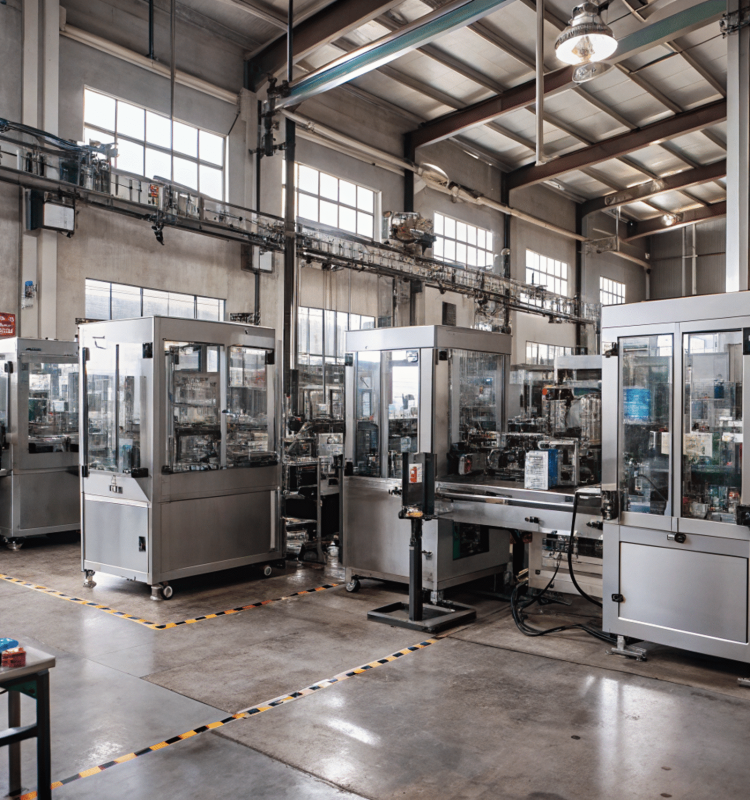
Maximizing throughput is all about eliminating bottlenecks and ensuring every part of your line works in harmony. A seamlessly integrated system does just that. It uses intelligent conveying and buffering to create a smooth, continuous flow. The case erector forms cartons on-demand, so the case packer is never starved for boxes. The case sealer receives packed cartons at a steady pace, allowing it to work without interruption. Finally, the pallet wrapper downstream communicates its status, so the line can adjust its speed to prevent backlogs.
A central control system acts like the conductor of an orchestra, managing the overall tempo. It matches the operating speeds of each machine, getting rid of the delays and errors that happen with manual hand-offs. This synchronized operation not only increases throughput but also reduces the overall cycle time for each product. This is how you unlock your line's true capacity.
| Feature | Standalone Machines | Integrated System |
|---|---|---|
| Workflow | Disjointed, with stops and starts | Continuous and synchronized |
| Bottlenecks | Common at slower stations | Eliminated by system-wide speed control |
| Labor | Required between each machine | Minimal, mostly for oversight |
| Efficiency | Low, limited by the slowest link | High, optimized for overall output |
How can you ensure your automated packaging system can easily adapt to different product sizes and packaging designs with quick changeovers?
Do product changeovers take hours of frustrating adjustments? This downtime destroys your efficiency, especially with high-mix orders. Modern systems with smart design can make these switches in just minutes.
Ensure adaptability with modular equipment and program-driven controls. With quick-release components and pre-programmed product recipes on an HMI, operators can execute changeovers in minutes, not hours, minimizing downtime and maximizing flexibility for varied production runs.
Designing for Agility
In today's market, flexibility is just as important as speed. Your packaging line must handle different product sizes and designs without long periods of downtime. The key to this is designing for quick changeovers, which involves two main parts: smart mechanical design and intelligent software control.
First, the mechanical design must be modular. This means components like guide rails, gripping heads, and sealing mechanisms are made for quick adjustment or replacement. Instead of using nuts and bolts that require tools and time, modern machines use tool-less options like quick-release clamps, handwheels with position indicators, and digital scales. This makes physical adjustments simple and repeatable.
Second, the system is driven by software. A high-performance line stores parameters for different SKUs (Stock Keeping Units) as "product recipes" in the Human-Machine Interface (HMI). To change over, the operator simply selects the next product from a menu. The system's servo motors then automatically adjust all critical points—like carton width, height, and sealing position—to the pre-set dimensions. This completely automated configuration is what reduces changeover times from hours to just minutes.
| Changeover Aspect | Manual Adjustment | Automated Changeover |
|---|---|---|
| Time | 1-2 hours | 5-10 minutes |
| Tools Required | Wrenches, Allen keys, etc. | Often tool-less |
| Operator Skill | High, requires expertise | Low, select recipe on screen |
| Accuracy | Variable, prone to error | High, digitally precise every time |
How can a seamlessly integrated end-of-line solution help you reduce labor costs and worker injury risks?
Are high labor costs and worker injuries a constant problem? Repetitive manual tasks lead to expensive injuries, staff turnover, and production interruptions. Automation solves this by handling the dangerous, repetitive work for you.
An integrated solution automates high-intensity, repetitive manual jobs like forming cartons, sealing boxes, and stacking pallets. This directly replaces multiple operators, reducing labor costs, and eliminates the physical actions that cause common workplace injuries, creating a safer environment.
A Safer, More Cost-Effective Workplace
A seamlessly integrated end-of-line system directly addresses two of the biggest challenges in manufacturing: labor costs and safety. By automating the entire process from case erecting to pallet wrapping, you can dramatically reduce your reliance on manual labor.
A single automated system can often do the work of several operators who would otherwise be forming boxes, filling them, sealing them with tape guns, and stacking them on pallets. This leads to significant savings in wages, benefits, and training costs.
Even more importantly, automation creates a much safer workplace. Many end-of-line tasks are leading causes of serious worker injuries. Constant bending to form cartons, repetitive wrist motions from using tape guns, and lifting heavy boxes are major causes of back injuries and Repetitive Strain Injuries (RSIs).
Automation takes over all of these high-risk, physically demanding jobs. Machines handle the repetitive movements and heavy lifting, protecting your employees from harm. This not only improves worker morale but also reduces costs related to injuries, insurance claims, and lost production time.
| Task | Manual Risk | Automated Solution |
|---|---|---|
| Carton Forming | Bending, repetitive motions | Case erector forms boxes automatically |
| Carton Sealing | Repetitive wrist/arm strain (RSI) | Case sealer applies tape automatically |
| Palletizing | Heavy lifting, risk of back injury | Robotic palletizer stacks boxes safely |
Conclusion
True packaging performance comes from an integrated, flexible, and safe system. Move beyond standalone machines to unlock your factory's full potential and achieve truly high-performance packaging.
[^1]: Discover more about the packing machines.