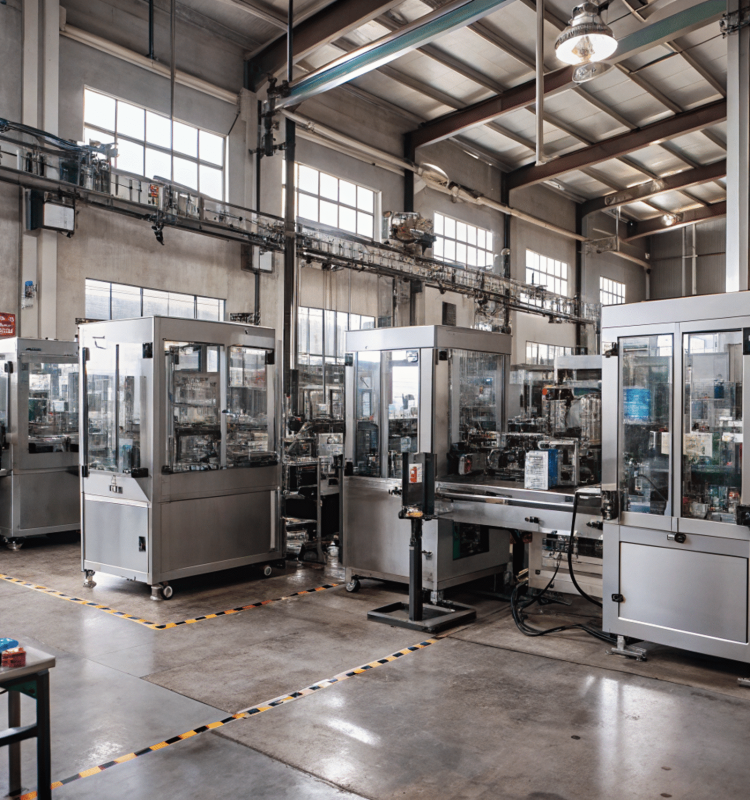
Choosing a new filling machine feels overwhelming. You need speed for output, but you also need flexibility for new products. The wrong choice can cripple your growth and waste money.
The best choice isn't about throughput versus flexibility. It's about finding a dynamic balance. You must tailor the machine to your company's current needs, product mix, and future plans. This decision impacts both your short-term costs and long-term ability to adapt to the market.
I've been in the manufacturing world for a long time, and I've seen companies make this decision many times. The choice you make isn't just about a single piece of equipment; it's a strategic move that affects your entire operation. It’s about creating a production system that works for you, not against you. Let’s break down the key questions you need to ask to find that perfect balance for your business.
What's the Right Level of Automation: Semi-Automatic vs. Fully Automatic Filling Machine[^1] for Your Lab?
Manual filling is slow and inconsistent, but a fully automatic line seems too expensive. This uncertainty can stall your decision, while operator errors and slow production continue to cost you.
Choose semi-automatic for R&D, small batches, or customized products. It offers a lower initial cost and faster changeovers. Go fully automatic for established, high-volume products. It reduces labor, boosts consistency, and gives you stable, predictable unit costs for large-scale production.
I once worked with a client who made artisanal sauces. They had dozens of recipes and bottle sizes. They were tempted by a high-speed, fully automatic line, thinking it would solve their production woes. But the reality was different. They spent more time changing over the machine than actually running it. The high investment sat mostly idle. They would have been much better off starting with a flexible semi-automatic machine. The key is to match the automation level to your production reality.
Key Differences to Consider
| Feature | Semi-Automatic Machine | Fully Automatic Machine |
|---|---|---|
| Initial Investment | Lower | Higher |
| Labor Requirement | High (operator needed for each cycle) | Low (supervision only) |
| Changeover Speed | Fast and Simple | Slower, more complex |
| Production Speed | Lower | Very High |
| Consistency | Operator-dependent | Very High and Repeatable |
| Best For | Startups, R&D, high-mix/low-volume | Established products, low-mix/high-volume |
If your team is handling many different products with unpredictable volumes, a reliable semi-automatic machine is a smart first step. But if you have a hero product that demands consistent, high-volume output, investing in full automation is how you scale up and improve quality.
How to Evaluate Filling Speed: Bottles per Hour or Overall Equipment Effectiveness (OEE)?
A machine's "bottles per hour" (BPH) spec looks impressive on paper. But what happens when frequent downtime for cleaning, changeovers, or repairs destroys your actual daily output?
Look past the advertised BPH and focus on Overall Equipment Effectiveness (OEE). OEE gives you a true picture of efficiency by measuring a machine's uptime, performance speed, and quality rate. A "slower" machine with high OEE often produces more than a "faster" one.
A high nominal speed means nothing if the machine is hard to work with. I've seen it happen. A company buys the "fastest" filler available, but its changeover process from one bottle type to another takes three hours. Another client bought a machine that was slightly slower on paper, but changeovers took only 20 minutes. At the end of the week, the "slower" machine had produced thousands more bottles. That's the power of OEE. It forces you to look at the entire process, not just one number.
Understanding OEE Components
OEE is a simple formula: OEE = Availability x Performance x Quality.
- Availability: This measures uptime. How much time is lost to unplanned stops, material shortages, or changeovers? A machine that runs consistently has high availability.
- Performance: This measures speed. Is the machine running at its designed speed, or are there minor stops and slow cycles dragging it down?
- Quality: This measures defects. How many filled bottles are rejected due to under-filling, over-filling, or other defects? A high-quality rate means less waste.
Pursuing a high OEE means you are pursuing real, tangible output and a better return on your investment.
Is a Compact Inline Filler or a Rotary Filling System Better for Your Floor Space and Output?
You need to increase output, but your factory floor space is limited. An inline filler seems compact but might be too slow, while a rotary system is fast but takes up a huge area.
Choose a compact inline filler for flexibility, smaller batches, and limited spaces. It's easier to expand and works well for high-mix production. Choose a rotary filling system for dedicated, high-speed mass production of a single product, but only if you have the space and budget.
The choice between inline and rotary is a classic trade-off between space and speed. Inline systems are like a straight production line. They are modular, flexible, and fit into tight spaces. You can add labeling or capping stations easily. This makes them perfect for businesses with a growing product line. Rotary systems work like a carousel, moving bottles in a circle at very high speeds. They are incredibly efficient for one specific product and bottle size. However, they are a large, fixed investment. Once a rotary line is built, it's not very flexible. Think about your five-year plan. If you expect to launch many new products, the flexibility of an inline system is probably a safer bet.
Inline vs. Rotary at a Glance
| Factor | Compact Inline Filler | Rotary Filling System |
|---|---|---|
| Footprint | Smaller, linear | Larger, circular or square |
| Speed | Moderate to High | Very High to Extremely High |
| Flexibility | High (easy to adjust for new bottles) | Low (designed for specific containers) |
| Initial Cost | Lower | Significantly Higher |
| Ideal Scenario | Multi-product lines, limited space | Single-product mass production |
Beyond the Filler: How Do Conveyor Systems and Closures Impact Your Overall Line Flexibility?
You bought a state-of-the-art filler, but your production line is still slow and inefficient. Bottlenecks at the conveyor or capper are frustrating and can stop your entire operation.
A filling machine is only one part of a system. The true flexibility of your line depends on your conveyor and capping units. If your conveyor can't handle different bottles or your capper takes hours to adjust, your fast filler is completely useless.
A production line is only as strong as its weakest link. I always tell my clients to think of the entire system. Imagine you have a filler that can be changed over in 15 minutes. That's great! But what if the guide rails on your conveyor system take an hour to adjust with wrenches and Allen keys? Or what if your capping machine can only handle one type of screw cap, but your new product uses a pump dispenser? The time you saved on the filler is completely lost. When you evaluate a line, you must consider every component. Flexible conveyors with quick-adjust guide rails and versatile cappers that can handle different closure types are just as important as the filler itself.
System-Wide Flexibility Checklist
Before you buy, ask these questions about the supporting equipment:
- Conveyors:
- How quickly can guide rails be adjusted for different bottle diameters?
- Can the system handle bottles of different heights without tipping?
- Are the belts and materials compatible with your products?
- Capping/Closing Unit:
- Can it handle all your current and planned cap types (screw, snap-on, pump)?
- How long does it take to change the capping head for a new closure?
- Is the torque or pressure application easily and accurately adjustable?
Viewing your line as one integrated system is the key to achieving true production flexibility.
Conclusion
Choosing the right filling machine is about balancing output and flexibility. You must look beyond a single machine's specs and consider your entire production system for today and tomorrow.
[^1]:Here are more vial filling machines.