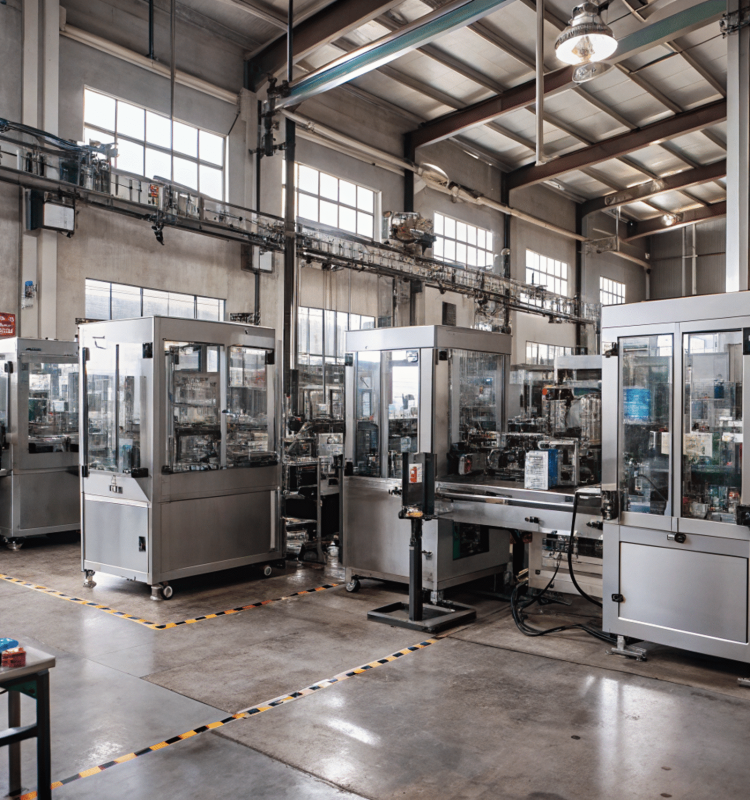
Filling volatile chemicals is extremely risky. The wrong machine can lead to disaster. You need a complete safety system, not just a filling machine, to prevent a catastrophic failure.
To select a safe explosion-proof filling machine, you must combine technologies. Use explosion-proof enclosures for high-power parts and intrinsic safety for controls. Design filling heads for subsurface filling and use chemical-resistant seals. Most importantly, you must eliminate all electrostatic discharge through proper grounding.
Choosing the right equipment for volatile chemicals is one of the most critical decisions you'll make. I've seen firsthand how a single weak point can compromise an entire operation. It's not just about filling a drum; it's about controlling every potential hazard in the explosion triangle: fuel, oxidizer, and ignition. We need to think of this as a complete "firepower requirement" system. Let's break down the key areas you must focus on to ensure your production line is truly safe and foolproof.
Intrinsic Safety or Explosion-Proof Enclosure: Which Is Right for Your Filling Machine[^1]?
Choosing between different explosion-proof technologies can be confusing. Making the wrong choice might compromise safety or turn simple maintenance into a major headache. You need to understand their specific uses.
An explosion-proof enclosure (Ex d) is for high-power parts like motors and pumps. Intrinsic safety (Ex i) is for low-power sensors and controls. The best and safest solution is almost always a combination of both technologies, tailored to your specific machine.
In my experience, people sometimes think one protection method is absolutely better than the other. That’s not the case. They are just different tools for different jobs. Getting this right is fundamental to building a machine that is both safe and practical to operate.
What is an Explosion-Proof Enclosure (Ex d)?
This is the most common and powerful protection method. Think of it as a very strong metal box. We seal any components that could create a spark or get very hot, like motors or main power switches, inside this enclosure. If something inside were to ignite the flammable vapor that seeped in, the box is strong enough to contain the explosion. It prevents flames or hot gases from escaping and igniting the much larger explosive atmosphere outside. This method is reliable and works well for high-power equipment like the pumps and large motors needed on a filling machine.
What is Intrinsic Safety (Ex i)?
Intrinsic safety works on a completely different principle. Instead of containing an explosion, it prevents one from ever happening. It does this by limiting the electrical energy in a circuit to a level so low that it cannot create a spark hot enough or a surface hot enough to ignite a volatile chemical's vapor. This is perfect for low-power components like sensors, measurement instruments, or control buttons. The big advantage is that maintenance is much easier because you don't need heavy, bolted-on enclosures. But it is not suitable for high-power equipment.
On our filling machines, we always use a hybrid approach. It's the smartest way.
| Technology | Best Application | Power Level | Maintenance |
|---|---|---|---|
| Explosion-Proof Enclosure (Ex d) | Motors, Pumps, Power Supplies | High | More complex (heavy covers) |
| Intrinsic Safety (Ex i) | Sensors, Switches, Instruments | Low | Simpler (no special enclosures) |
How Can Your Filling Head and Seals Prevent Vapor Leaks and Ignition?
Vapors leaking from your filling head are an invisible danger. These vapors are the fuel just waiting for a spark, which turns your filling area into a ticking time bomb.
To control these dangerous vapors, you must use a subsurface filling head that minimizes splashing and a vapor recovery system. At the same time, you need high-quality seals made from materials like PTFE or FFKM that won't degrade and cause leaks over time.
The filling head and its seals are your front line of defense against vapor leakage and potential ignition. This is where the liquid meets the air, and it's the most likely place for dangerous fumes to escape. I once visited a plant where a client was having issues with product loss and a constant chemical smell. The problem was simple: they were using a top-fill method, splashing a volatile solvent into drums and creating a huge cloud of vapor with every fill. We helped them switch to a bottom-fill system, and the problem disappeared overnight.
The Importance of Subsurface Filling
You must use a filling method called "subsurface" or "bottom" filling. This means the filling nozzle extends all the way to the bottom of the drum before starting the fill. The liquid fills from the bottom up, with the outlet always below the surface of the liquid. This simple change is incredibly effective because it prevents the liquid from splashing and becoming turbulent, which dramatically reduces how much vapor is generated. Additionally, a well-designed filling head should have an integrated vapor recovery hood. This acts like a vacuum, capturing any vapors that do escape and routing them safely away from the work area.
Choosing the Right Seal Material
Your seals are just as critical. A small leak is a constant source of fuel for an explosion. You cannot use standard rubber or plastic seals. Volatile chemicals are often aggressive solvents that will eat through common materials. You must use specialized seals made from materials with very high chemical resistance, like PTFE (Teflon) or FFKM. These materials will not swell, crack, or degrade even after long-term contact with corrosive liquids. Every connection point, from pipe flanges to the filling nozzle itself, must use high-integrity gaskets and seals to completely eliminate leakage.
How Do You Eliminate the Hidden Danger of Electrostatic Discharge?
You have secured the machine and sealed the vapors, but an invisible threat remains. A tiny, unseen static spark can ignite flammable vapors in an instant, causing a catastrophic explosion.
To eliminate static, you must connect everything to a proper grounding system. This includes the filling machine, pipes, and the drum itself. Use an interlocked grounding clamp that physically prevents the machine from starting until a safe ground connection is confirmed.
Of all the ignition sources, electrostatic discharge (ESD) is the most sneaky and one of the most dangerous. I always tell my clients that assuming you're safe from static is a huge mistake. Static electricity is generated whenever low-conductivity liquids, like many solvents and fuels, flow or rub against surfaces like the inside of a pipe or a filter. The charge builds up, and if it's not given a path to safely drain away, it will discharge as a high-energy spark the moment it gets near a conductor. That spark is more than enough to ignite a flammable atmosphere.
Grounding and Bonding are Essential
The solution to ESD is straightforward but must be done perfectly. It comes down to two key actions: grounding and bonding.
- Grounding: This is the most important step. Every piece of metal equipment in the area—the filling machine, the storage tanks, the pipes, and especially the drum you are filling—must be connected to a verified earth ground. Your filling machine absolutely must have an integrated electrostatic grounding clamp with an interlock system. This system checks that the drum is properly grounded before it will allow the pump to turn on. If the connection is broken, the filling process stops immediately. This is not an optional feature; it is a necessity.
- Bonding: Bonding ensures there is no difference in electrical potential between two objects. For example, you must make sure the metal filling nozzle is bonded to the drum. This prevents a spark from jumping between the nozzle and the drum's opening during the fill.
Operators are part of the system too. Everyone working in the area must wear anti-static footwear and clothing to prevent their own bodies from building up a static charge.
| ESD Prevention Method | Purpose | Key Action |
|---|---|---|
| Grounding | Drains static charge safely to the earth. | Connect all equipment to a verified ground. |
| Interlock System | Prevents filling without a proper ground. | Use a grounding clamp with a monitor. |
| Bonding | Equalizes charge between objects. | Connect the nozzle to the container. |
| PPE | Prevents human body static buildup. | Wear anti-static shoes and clothing. |
Conclusion
A safe filling system combines the right explosion-proof tech, smart design to control vapors, and total elimination of static electricity. Getting all three right is not optional; it's essential.
[^1]:Discover more chemical liquids filling machines.