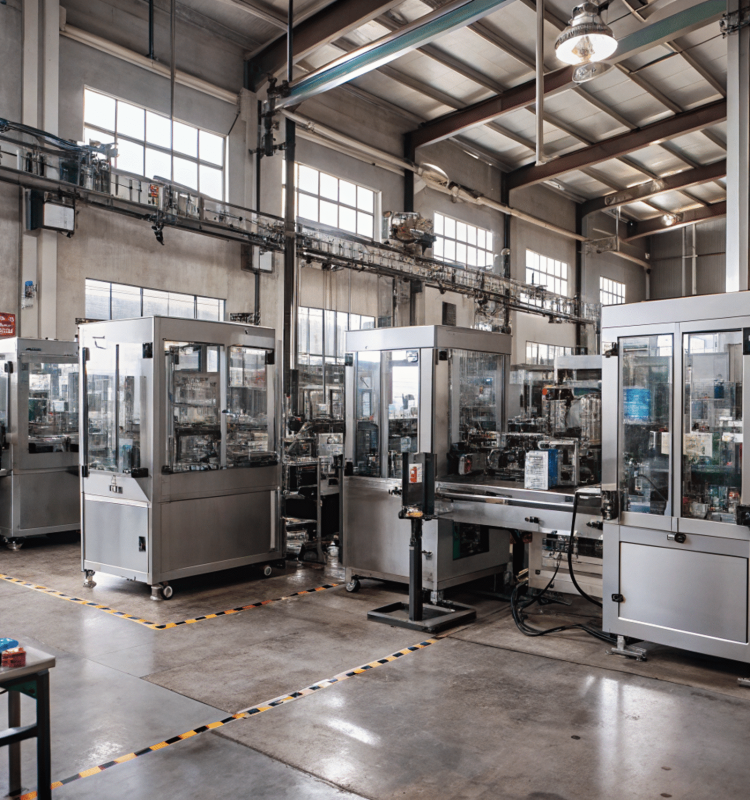
Struggling with inconsistent fill volumes in your production line? This fluctuation can affect patient experience and product trust, even when within official tolerances. It’s a costly problem.
For high-accuracy eye drop dosing, ceramic piston pumps offer superior long-term precision and consistency due to their wear-resistant parts. Peristaltic pumps provide excellent sterility and flexibility for frequent product changeovers, making them ideal for applications where cross-contamination is the primary concern.
A client once came to me with a challenge. They had a new, high-end eye drop solution. In the lab, their low-flow peristaltic pumps worked perfectly. But on the high-speed production line, they saw small but persistent fluctuations in fill volume. They wanted exceptional precision, and their current system wasn't quite delivering.
This experience taught me a valuable lesson: the choice between a peristaltic and a ceramic pump isn't about which is better overall. It’s about which is right for a specific job. Understanding the unique strengths of each system is key to achieving the precision you need for mass production. Let's dive into the details.
How to Choose Between Ceramic and Peristaltic Pumps[^1] for Sterile Ophthalmic Formulations?
Choosing a pump for sterile products is tough. A wrong choice can lead to contamination risks or validation headaches, slowing down your entire operation and compromising safety.
For sterile formulations, choose a peristaltic pump if you need frequent line changeovers and zero cross-contamination risk. Select a ceramic pump for its high precision and easy integration with automated Clean-In-Place/Sterilize-In-Place (CIP/SIP) systems for dedicated, high-volume production lines.
The decision here really comes down to your operational priorities: flexibility versus dedicated precision. I've seen teams succeed with both, but only when they matched the pump to their specific aseptic process and product portfolio. A peristaltic pump's core strength is its sterile pathway. The liquid only ever touches the disposable tubing, which is often made from pharmaceutical-grade silicone. This design creates a natural barrier against contamination and makes product changeovers incredibly simple and fast. It's perfect for contract manufacturers or lines that handle multiple biologic formulations.
On the other hand, ceramic pumps are built for precision and long-term integration. They are the gold standard for handling low-viscosity aqueous solutions with extreme accuracy. Their components are durable enough to withstand rigorous CIP/SIP cycles. If you're running a dedicated line for a single high-volume product where dosing accuracy is the absolute top priority, a ceramic pump is often the better investment.
Key Selection Criteria
| Feature | Peristaltic Pump | Ceramic Pump |
|---|---|---|
| Sterility Method | Disposable Tubing (Single-Use) | CIP / SIP Systems |
| Cross-Contamination Risk | Extremely Low | Low (Requires validation) |
| Best For | Frequent product changeovers, biologics | Dedicated, high-volume lines |
| Validation | Simpler, focused on tubing | More complex, system-wide |
What Are the Critical Differences in Dosing Accuracy: Ceramic Piston vs. Peristaltic Pump Technology?
Are you chasing down tiny inconsistencies in fill volume? This chase for perfect dosing can lead to production delays and frustration when the root cause isn't clear.
Ceramic piston pumps offer superior dosing accuracy, typically ±0.1% to ±0.5%, due to their rigid, wear-resistant mechanical design. Peristaltic pumps are less precise over long runs, as the flexible tubing's elasticity changes, affecting flow consistency, especially under high pressure.
This is where the engineering difference between the two systems becomes most apparent. I always think of a ceramic pump as a precision mechanical instrument. It's a positive displacement pump, meaning it moves a precise, fixed volume of liquid with each stroke of its ceramic piston. The components are made from ultra-hard, wear-resistant ceramic with minimal clearance. This ensures that the first dose and the millionth dose are virtually identical. The pump's performance is almost entirely unaffected by small changes in liquid viscosity or back pressure.
A peristaltic pump, in contrast, relies on the elasticity of its tubing. Rollers squeeze the tube to push a segment of fluid forward. Its initial accuracy can be quite good, but it depends heavily on the tube's inner diameter and ability to spring back into shape perfectly every time. Over a long production run, this elasticity can change, leading to flow fluctuations. For the ultimate in long-term, high-consistency dosing, especially for valuable eye drops, ceramic pumps have a clear mechanical advantage.
Accuracy Breakdown
- Ceramic Piston Pump:
- Mechanism: Positive displacement via a reciprocating piston.
- Core Strength: Mechanical rigidity and wear resistance ensure consistent volume.
- Typical Accuracy: ±0.1% to ±0.5%.
- Peristaltic Pump:
- Mechanism: Rollers compressing flexible tubing.
- Core Strength: Sterile fluid path.
- Accuracy Limiter: Tubing elasticity and wear over time.
How Does Tubing Wear Impact Peristaltic Pump Filling Accuracy in High-Cycle Production?
Are you noticing your fill accuracy drifting after a few hours of production? This forces frequent recalibrations, causing downtime and wasting valuable product as you dial the system back in.
In high-cycle production, tubing wear is the primary cause of declining accuracy in peristaltic pumps. The repeated squeezing action causes the tube to lose elasticity and deform, leading to inconsistent fill volumes. This requires regular tubing replacement to maintain precision.
I've seen this happen firsthand. A team will calibrate their peristaltic pump perfectly at the start of a shift, only to find the fill volumes are slightly off by the end. The issue is tubing fatigue. The constant compression from the rollers causes the tube material to experience plastic deformation. This means it doesn't fully return to its original shape after each squeeze. The tube's inner diameter might shrink, or its wall thickness might change, altering the volume of fluid pushed with each rotation.
This gradual degradation directly translates to a loss of repeatability and accuracy. To combat this, production lines must build a strict schedule for tubing replacement and recalibration. While necessary, this adds to operational costs, increases downtime, and adds to the validation workload. This is a critical factor to consider when planning for large-scale, continuous manufacturing. In contrast, the hard ceramic components of a piston pump do not suffer from this type of wear, allowing them to maintain extreme accuracy over millions of cycles without material fatigue.
Managing Tubing Wear
- Material Selection: Choose high-quality, durable tubing designed for long-life pump applications.
- Scheduled Replacement: Implement a strict schedule for replacing tubing based on cycle count, not just visual inspection.
- Regular Calibration: Perform routine calibrations throughout a production run to adjust for any drift in performance.
Minimizing Product Loss: Which Pumping Technology Best Handles High-Viscosity Ophthalmic Fluids?
Struggling with high-viscosity fluids? These solutions can cause pump strain, inaccurate dosing, or even damage to the product itself, leading to significant waste and quality control issues.
For high-viscosity fluids, peristaltic pumps are often better at minimizing product loss. Their gentle, low-shear pumping action protects sensitive formulations. Ceramic pumps can handle high viscosity but may introduce high shear forces, potentially degrading certain polymer-based solutions.
When you're working with thicker, gel-like ophthalmic solutions, the choice becomes more complex. On one hand, a ceramic piston pump has the raw power to move viscous fluids effectively. Its positive displacement action can overcome the fluid's resistance to ensure accurate volumetric delivery. However, the rapid movement of the piston can create high shear forces between the piston and the chamber wall. For shear-sensitive formulations, like those containing delicate polymers, this can break down the product's structure, affecting its efficacy and leading to waste.
This is where peristaltic pumps shine. They provide a much gentler pumping action. The rollers gently squeeze the fluid through the tube, minimizing mechanical stress on the solution. This low-shear environment is ideal for protecting the integrity of sensitive or highly active ingredients. While a peristaltic pump might need to run at a slower speed to allow the tubing to recover when pumping thick fluids, its ability to preserve product quality often makes it the superior choice, ultimately reducing product loss from degradation.
Viscosity Handling Comparison
| Pump Type | Pros for High Viscosity | Cons for High Viscosity |
|---|---|---|
| Ceramic Piston Pump | Strong positive displacement overcomes resistance. | High shear forces may degrade sensitive products. |
| Peristaltic Pump | Gentle, low-shear action protects product integrity. | May require slower speeds to allow tubing to recover. |
Conclusion
Choosing the right pump depends on your specific needs. Ceramic pumps offer unmatched long-term accuracy, while peristaltic pumps provide superior sterility control for flexible production lines.
[^1]: Exolore the conception of peristaltic pumps.